1. Trends and challenges in neurodegenerative disease therapy
Alzheimer’s disease is a prototypical neurodegenerative disorder, with its incidence steadily increasing in aging populations.
Current therapeutic strategies are primarily focused on symptomatic management or modest slowing of disease progression. The development of disease-modifying therapies capable of significantly improving cognitive function and targeting key pathological processes remains an unmet need.
The pathogenesis of Alzheimer’s disease is multifactorial, involving complex interactions among aging, genetic susceptibility, and dysregulation of proteostasis. Consequently, it is challenging to fully characterize or treat the disease through a single mechanism or target.
Furthermore, the blood–brain barrier (BBB) poses a significant obstacle to effective drug delivery. Thus, therapeutic development must incorporate considerations of delivery efficiency, patient stratification, timing of intervention, and safety, in addition to targeting brain pathology.
Collectively, these challenges highlight the need for integrated therapeutic strategies that address both disease pathophysiology and the broader central nervous system (CNS) environment in the development of disease-modifying treatments.
2. Alzheimer’s disease research in our Lab
2-1) Blood biomarkers
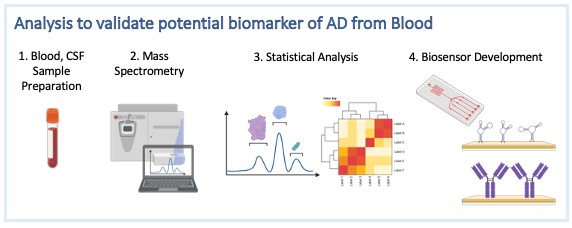
Our research aims to identify blood-based biomarkers for early diagnosis and monitoring of disease progression, facilitating more accurate disease stage classification and informed selection of patient-specific therapeutic strategies.
Furthermore, we pursue translational biomarker research integrated with clinical cohorts to enable rapid, non-invasive tracking of disease progression and treatment responses.
2-2) Pathological protein aggregation
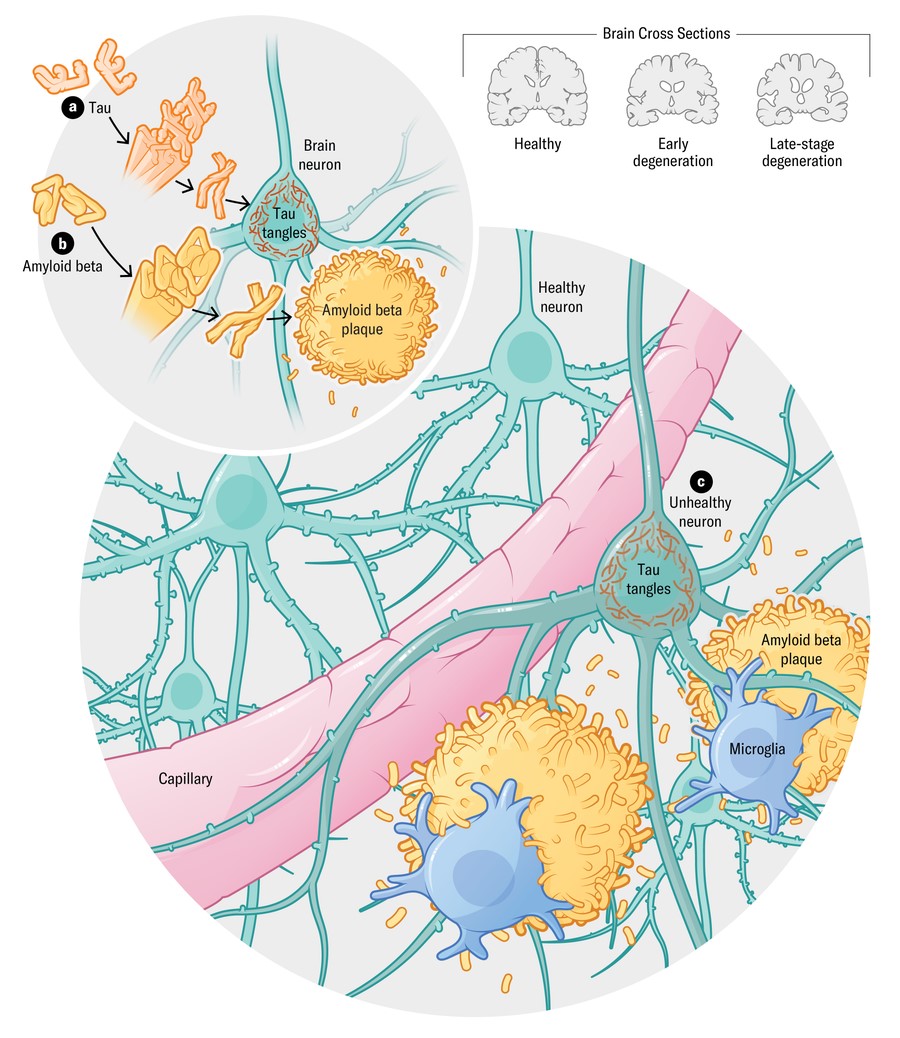
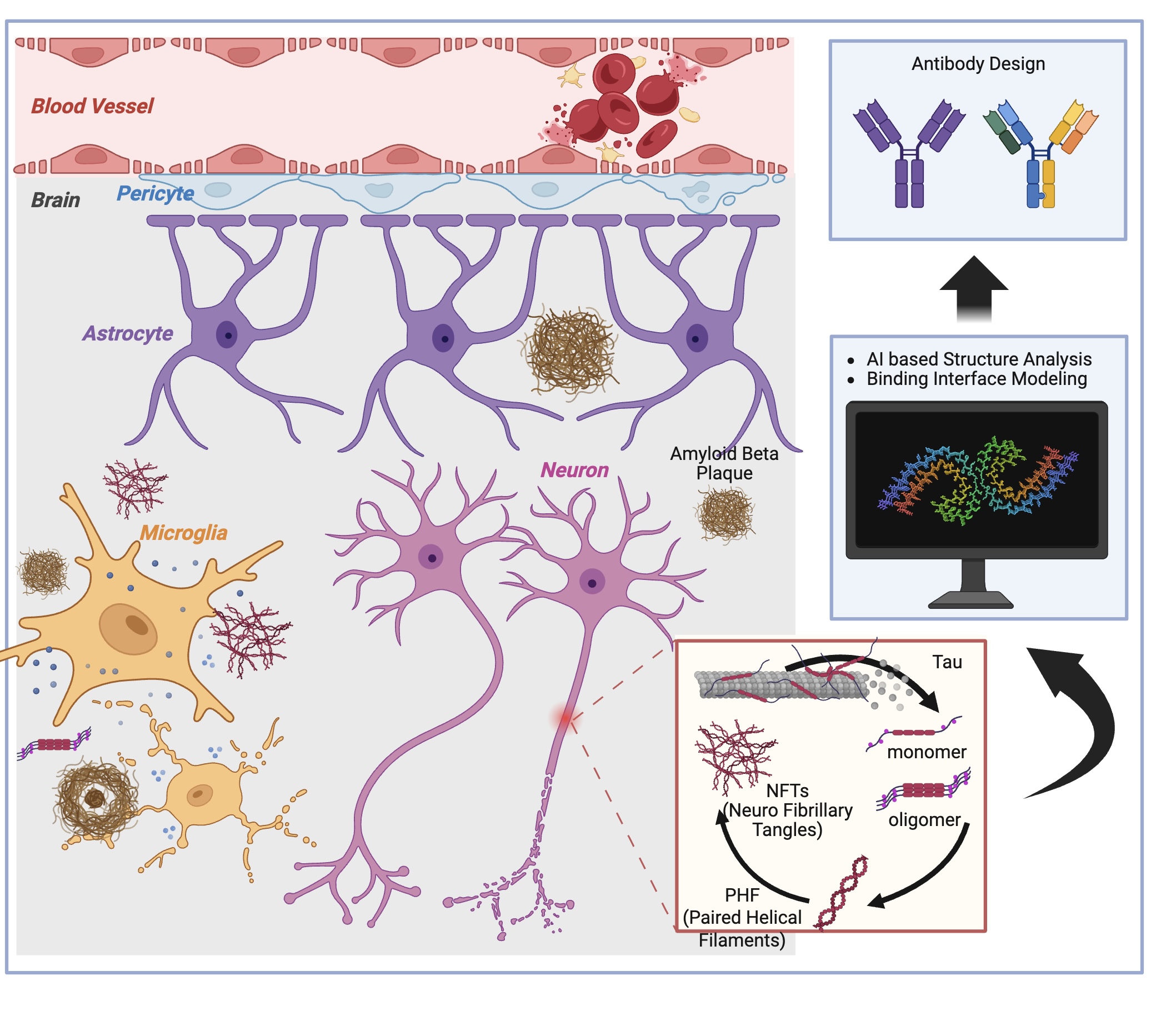
Our research focuses on designing therapeutic strategies targeting the hallmark pathological features of Alzheimer’s disease, namely the abnormal aggregation and intercellular propagation of amyloid-beta and tau proteins. Through AI-driven structure-based analyses, we characterize the structural properties of protein aggregates and develop targeted therapeutic approaches.
2-3) CNS Immune system
Neuroinflammation and immune responses within the central nervous system are key determinants of disease progression and therapeutic response in neurodegenerative disorders. We examine the roles of the brain immune microenvironment, including microglia and astrocytes, in modulating protein pathology and neuronal injury, and investigate the feasibility of immune-based therapeutic interventions.
2-4) BBB Penetration
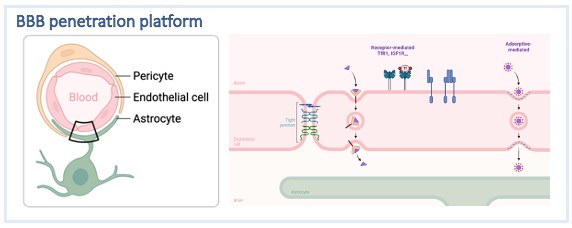
Our research focuses on developing delivery platforms that improve the brain penetration and delivery efficiency of antibody-based therapeutics across the blood–brain barrier (BBB). Furthermore, we aim to design safer CNS delivery systems that mitigate treatment-related adverse events, including amyloid-related imaging abnormalities (ARIA), commonly observed in anti-amyloid therapies.
Accordingly, our research focuses on developing next-generation therapeutics that simultaneously target disease modification and cognitive improvement in Alzheimer’s disease and other neurodegenerative disorders. These efforts are pursued through four strategic research directions as outlined above.